James Baldwin. Baldwin. Jimmy. What comes to mind when you hear his name? When you hear his name what do you think of? Maybe after reading David Leeming's biography book on the one of a kind Mr. Baldwin those thoughts and images may be expanded to more deeper things (lack of a better word). Deeper things-in a good way-because this book takes us from when Mr. Baldwin was a child to his grave (who was at the funeral, what songs were sung during the funeral service, etc.).
The last 10 pages for me were heartbreaking, emotional, hard to read at times, but by the end you feel like you've experience a man's struggles, pain, delights, complexity during his immense involvement in social change in America and how his work effected many around the globe (Paris, Africa and Istabul).
Mr. Baldwins' insight in America, world events, race, ghettos, literature, injustice, history, etc. is incredible, his commentary is always fascinating to listen to. He could be many things to many people and as the years went on Mr. Baldwin became a mentor to the future generation which I thought was very cool and important. This shows the depth of his work and what he meant to various age groups and his encounters with people and the entourage he'd have, this defined him as far as how he treated people and what he stood for is something that became clearer as I read the book.
It's a 300+ book that is worth every page. And since I'm a writer there were lines in the book that I could relate to, so how David Leeming (he'd known James Baldwin for over 20 years) describes the lifestyle and the mindset of a writer and the sacrifices that a writer has to experience is captured and explained well.
I've read a good amount of his books (novels/essays) so far (and looking forward to reading certain ones over again), but I'm really looking forward to reading his last novel 'Just Above My Head'. The way it's described in the bio it sounds like it all come together in his last novel-it was his longest too. The works he didn't get done are mentioned in the book, which is also interesting, because it reminds me of one Mr. Baldwins' poems where he says 'time is not money, time is time, like everything is everything...'
Here is a passage that has stuck with me since I finished reading the book:
'He [James Baldwin] reminded his brother [David Baldwin] that racism is based on fear, that when the white racist confronts the black man, what he sees is not the individual man but a "nightmare" of his own creation. Above all, he said, "you must take care not to step inside" his nightmare, his guilt, and his fear, his hatred. To step into the nightmare is to justify it and to relinquish the soul's freedom and the control over one's life. To enter the nightmare is to become a "nigger".
I didn't know he tried to kill himself more than once, didn't know he preached for three years when he was a teenager, faced violence and that he left new york to go to Paris with very little money, and a bessie smith record. He had to write. He told his mother at the age of 8 that he was going to be a great writer someday and that it was all he wanted to do.
Thank you David Leeming for writing such a magnificent biographical book!
Showing posts with label biography. Show all posts
Showing posts with label biography. Show all posts
Tuesday, September 20, 2016


Friday, November 14, 2014
Book of Towers 6: Steve Mcqueen
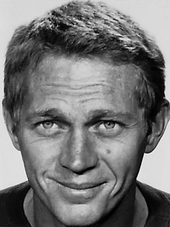
Reading Marshall Terrill's biography was such a thrill. The whole book flows so smoothly, the chapters aren't long and it is meticulously researched. The book covers Steve's troubled childhood, to how he caught the acting bug and went onto television and eventually cinema. What I like about the book is how it covers Steve McQueen's love for car racing and how he treated the people around him-good and bad-and how reconciliation worked in his later life. His later life is a story of redemption. Steve McQueen became a born again christian thanks to a couple of encounters in his life that influenced him.
The book proves to the reader what made Steve McQueen such a icon-and not just during his time but even today how he has effected fashion and how he paved the way for the male actors now as far as one's characteristics on screen.
There are some eye opening sequences in the book that will make you see McQueen in a different light but that's okay because it only makes him more down to earth and that he's only human. There are some funny parts, touching parts and aggravating parts because of his immature behavior. But I must say his life overall is inspiring because when you know where he came from and what he went through to become a millionaire and a international superstar with a capital 'S', then you come to appreciate and understanding him a lot more; especially for the many incredible things he did for people.
It's a long book but it goes quick, matter of fact it was bittersweet to arrive at the end. One of the best biographies I've ever read.
Monday, October 27, 2014
Book of Towers 5: I, Fellini

Charlotte Chandler is an incredible biographer. Reading 'I, Fellini', has been so liberating. Fellini seems to be so open, so blunt, and transparent no matter what he discusses in this revealing biography. It's easily one of the best psychological intrusions about what a director experiences while making films.
'When I am working on a film, that's the time I am bombarded by the greatest number of outside ideas, ideas not for the film on which I am working. That would be natural, to have ideas for the film in which I've involved, but the ideas that come knocking are for other stories, entirely different ones. These ideas are actually competing for energy, actually a synergy of ideas. The creative forces are let loose, but the creative spirits do not know anything about discipline...the important thing is that you have to be open to life. If you are, the possibilities are infinite. It's important to preserve your innocence and your optimism, especially when it's not easy.' -Fellini
The brilliance of the book is how Charlotte is able to make her subject very relaxed around her. Fellini embodied film; he started out as a cartoonist, met a wonderful woman-Giulietta Masina-who was a excellent actress and they worked together to created award winning films. He received his life achievement award but still struggled to get financing for his films.
There were things he mentioned-like the quote above-that I could really relate to. I was so touched and moved by his relationship with Giulietta. And towards the end of his life it became very rough-physically-and Giulietta remained by his side.
'Giulietta' always worried about me. She made sure my socks matched, wondered if my feet were wet so I wouldn't catch a cold. It's really the countless little things that make or break a marriage. Even when we quarreled, I knew she cared about me. No one else meant so much in my life.' -Fellini
I began to watch Fellini's films back in college. It's the excellent combination of music and image; his films I found to be light, fun, entertaining but can also be sad and troubling-the incredible sequence in 'La dolce Vita' -when Marcello's character runs into his dad. The end result of their scene was unexpected. The last scene in 'La Strada' is surprisingly uplifting. There are several sequences in '8 1/2' that are monumental-the camera work is brilliant throughout the whole film. The scene in the castle in 'La dolce Vita' is incredibly paced. Fellini talks about improvisation-which many people think he did a lot of on his set-which isn't true. Many thought he just made a lot up on the day of...but Fellini was very well prepared but remained open because you can miss out on something special that wasn't planned.
There so much that I can mentioned that I really enjoyed in the book but it's best you just read it, even if you're not a fan but a cinema lover. And this is not to say that I agreed with everything he said, because I don't but it's his honesty about what it is to be a director-that's what fascinates me. He knew the importance of the responsibility that the director beheld.
'Freedom can be a problem, because being a director of films is a responsibility, and responsibility and freedom are in conflict. The money of the few and the lives of the many are in my hands. Films have such power to influence; that, too, is responsibility.' -Fellini
Subscribe to:
Posts (Atom)